Posts

Chess Trivia I

Image
  Max Harmonist (1864-1907) was a German chess master and a royal ballet dancer.   In chess, he beat Blackburne, Gunsberg, Mieses, Paulsen, and Tarrasch.   Despite being a professional ballet dancer, he suffered from cerebral palsy.   Dr. Elmer E. Southard (1876-1920) was a noted neurologist of Boston.   He represented his college (top board at Harvard) in the intercollegiate chess matches, and scored 24 wins out of 24 games in the four annual contests of his collegiate career.   He was able to play 6 chess games blindfolded simultaneously.   At Danvers State Hospital, he introduced a move he called the Danvers opening – 1.e4 e5 2.Qh5. (source: Chess Review , Jan 1933, p. 10) On September 3, 1900, the first Western Chess Association (the first U.S. Open) was held in Excelsior, Minnesota.   The winner was Louis Uedemann (1854-1912).   He won it again in 1902. On May 20, 1901, German chess master Johannes von Minckwitz (1843-1901) died ...

Efim Bogoljubov (1889 -1952)

Image
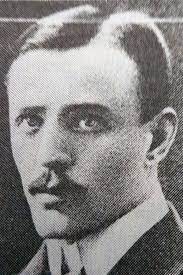
  Efim Dmitriyevich Bogoljubov (Bogoljubow) was born in Stanislavchyk (300 miles west of Kjiv), Russian Empire, on April 14 (New Style), 1889.   He was born in the family of a village priest.   The Russian name “Bogoljubow” means “beloved by God.”   The village where he was born is in western Ukraine.   From 1918 to 1939, the village was part of Poland.  He learned the game in 1904, when he was 15. When he was a young man, his father sent him to the Kiev Religious Seminary.   Efim studied there for 11 years.   He wanted to become a priest. In 1908, Efim was mentioned as a chess player for the first time.  In 1909, he was one of the strongest players in Kiev (Kjiv). In 1909, he tied for 1 st -2 nd in a chess tournament held in the “Warsaw café” in the center of the city. In 1909, he took 2 nd -3 rd at a chess tournament held at the sports club at Kreshatik.  In 1909, he took 3 rd -5 th in the Kiev chess championship. ...

Oldřich Duras (1882-1957)

Image
  On October 30, 1882, Oldrich Duras was born in Humny (Pchery, Bohemia), Austria-Hungary (now the Czech Republic).   His father, Adolf, was a former mayor of Humny.   In 1890, he went bankrupt and moved to Prague, 20 miles away, where he worked as an insurance clerk.   His mother was Frantiska Durasova.  Oldrich had a younger sister, Božena (born in 1885), who became a well-known diva and leading lady at The City Theatre of Prague.   She later married Jan Š tursa (1880-1925), one of the founders of modern Czech sculpture. Oldrich attended primary and grammar school in Prague.   He later attended the College of Commerce in Prague.   Oldrich learned chess from his uncle, Vojtech Vlk, during holiday visits back in Humny.   By 1899 at age 17, Oldrich was regularly beating his uncle.  In September 1899, Oldrich became a member of the Czech chess club Český spolek šachovní (Czech Association of Chess), located in Jedlicka’s Cafe in ...

Chess Theoretical Novelties

Image
  In a recent Reddit article on measuring chess novelties (called the Agadmator Index), it mentioned that I probably played more novelties than anyone in chess.   I was ranked as the top player with the most chess novelties per move, and the first among players with at least 1,000 total chess games (I have played and recorded over 62,500 chess games from 1969 to 2022) in the Caissabase database to compare with.   (source; Measuring novelties: the Agadmator index : chess (reddit.com) ) Here are some of my early chess novelties.  Bosse – Bill Wall, Tacoma Chess Club 1969 1.e4 Nf6 2.e5 Nd5 3.d4 d6 4.c4 Nb6 5.Nf3 (5.exd6) 5…g6 (5…Nc6) 6.Nc3 (6.exd6) 6…Bg7 7.Bf4 (7.exd6) 7…O-O 8.Be2 (8.Bd3) 8…dxe5 (TN).   This is new, a theoretical novelty.   Previously played were …Nc6, …Bg4, …N8d7, …Be6, and …Na6.   I repeated this novelty in Nineball – Wall, Internet 1999 and won in 14 moves.   Bosse played 9.Bxe5 (9.dxe5 Nc6 or 9…Bg4) 9…Bxe5 10.Nxe5 Bf5 and Bla...